Trusted by 5,000+ Businesses Worldwide

Headless CMS Development

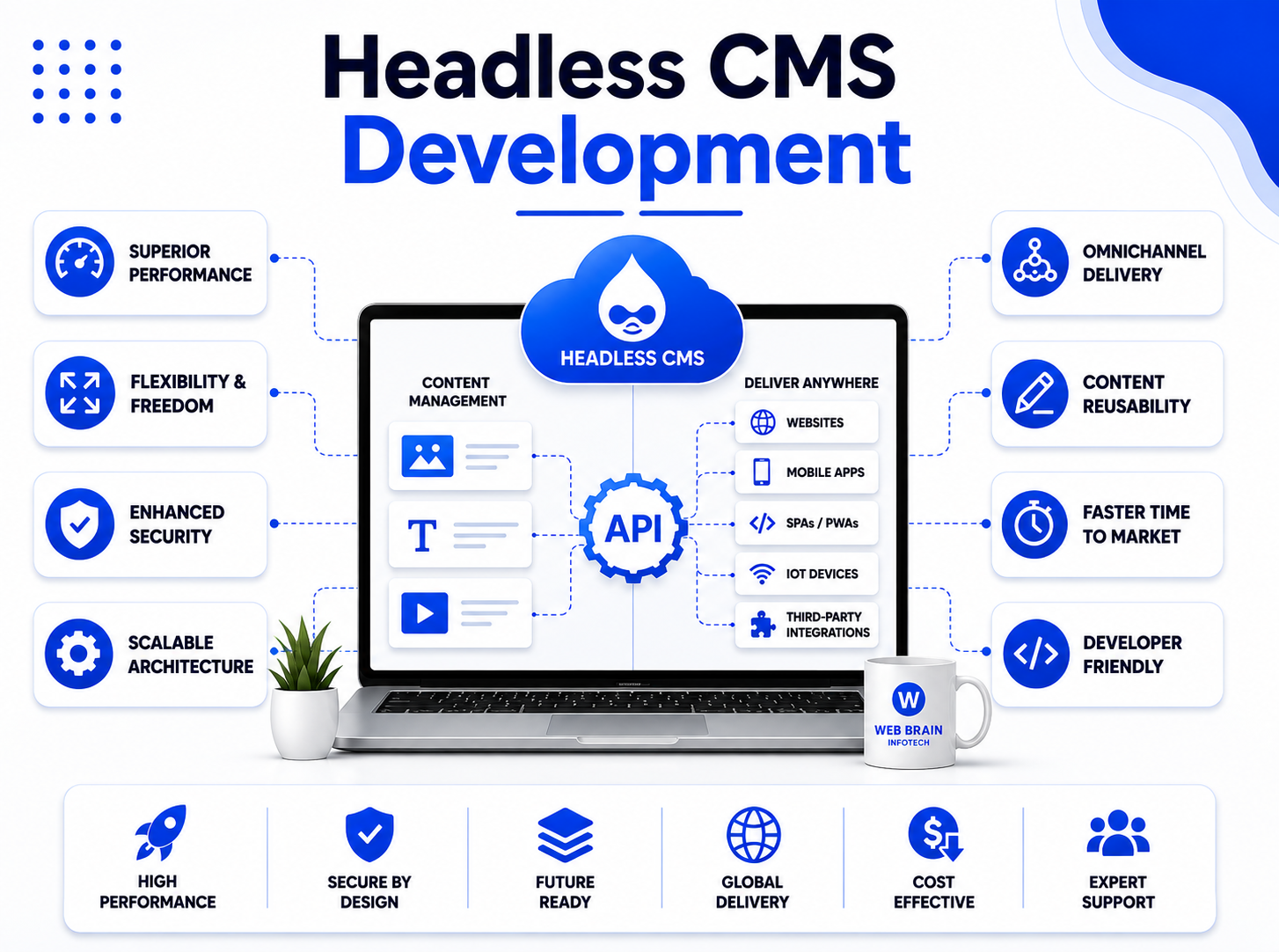
Web Brain InfoTech, based in Delhi, India, builds headless CMS solutions for businesses across India and worldwide. A headless CMS separates content management from content presentation, allowing the same content to power websites, mobile apps, and other digital touchpoints through APIs.

★★★★★ 4.9/5 rating from 19,000+ verified reviews

Get a Free Project Quote

Headless CMS Development Team
Why WebBrain

Headless CMS Development Company in Delhi, India

This architecture gives businesses the flexibility to use modern frontend frameworks while content teams continue managing content through a familiar editorial interface, without the two systems being tightly coupled.

Web Brain InfoTech delivers headless CMS development solutions to clients in Delhi NCR, across India, and internationally, including the United States, United Kingdom, UAE, Canada, and Australia.

What Is a Headless CMS?

A headless CMS is a content management system that stores and manages content separately from how that content is displayed, delivering it through APIs rather than rendering it directly into a fixed frontend template.

Decoupled Architecture

Content backend independent from frontend

CORE

API-First Delivery

REST or GraphQL APIs

Omnichannel Publishing

Websites, mobile apps, IoT

Frontend Freedom

React, Next.js, Vue.js

Content Modeling

Structured content types

Scalable Delivery

CDN-based global performance

How Is a Headless CMS Different From a Traditional CMS?

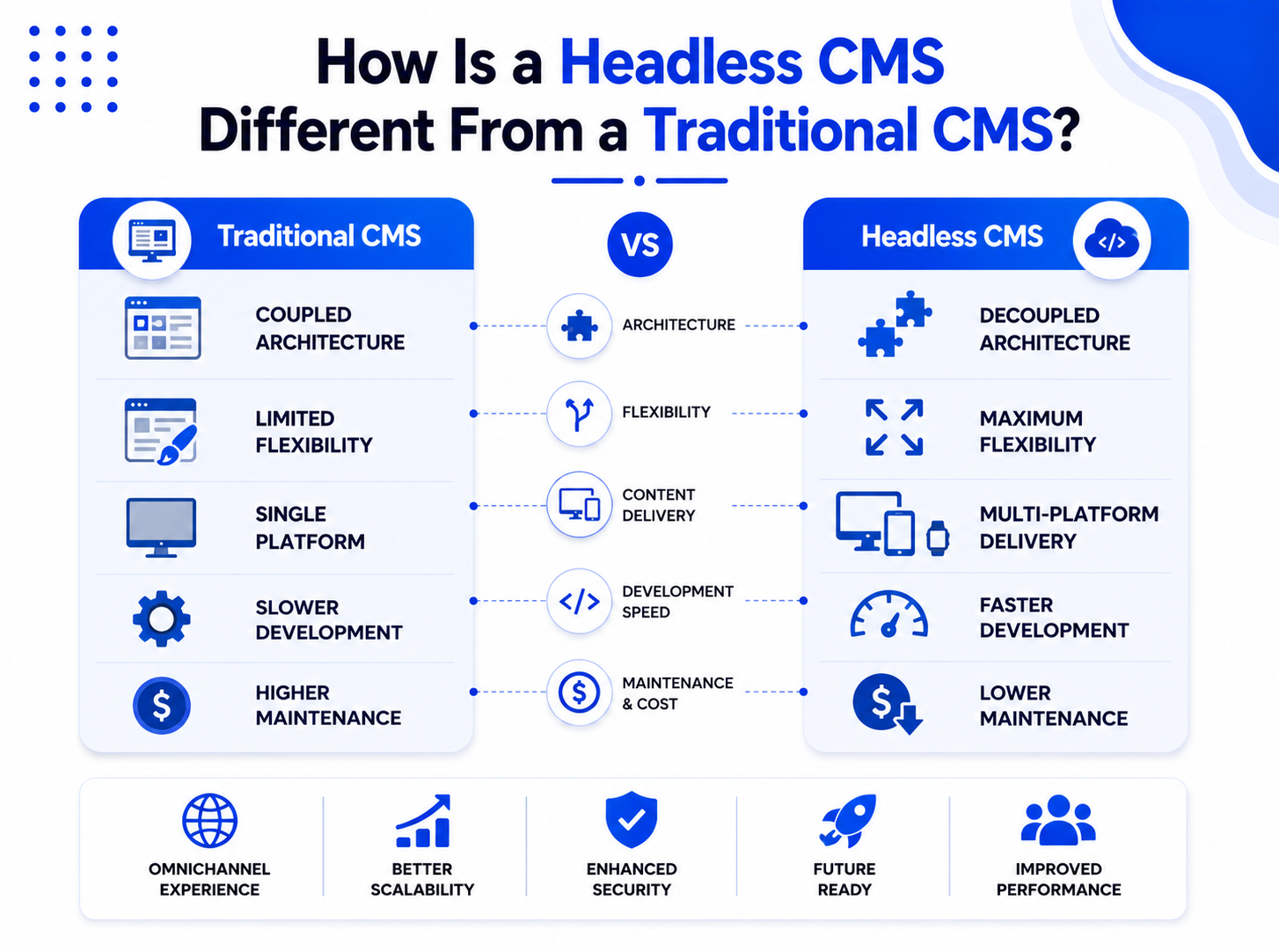
Traditional content management systems, such as standard WordPress installations, combine content storage and presentation within a single, unified platform.

Content and Presentation

Traditional: Tightly coupled | Headless: Fully decoupled

Frontend Technology

Traditional: Tied to CMS templating | Headless: Any framework

Multi-Channel Publishing

Traditional: Limited | Headless: Native support for multiple channels

Developer Flexibility

Traditional: Constrained | Headless: High flexibility

Headless vs Traditional CMS
Why Headless CMS?

Why Do Businesses Choose Headless CMS Architecture?

Headless CMS adoption has grown significantly as businesses manage content across an increasing number of digital channels.

Omnichannel Delivery

Web, mobile apps, IoT

Improved Frontend Performance

Modern frameworks like Next.js

Developer Flexibility

No templating constraints

Better Scalability

Independent scaling

Improved Security

Reduced attack surface

Multi-Region Management

Structured localization

What Are the Most Popular Headless CMS Platforms?

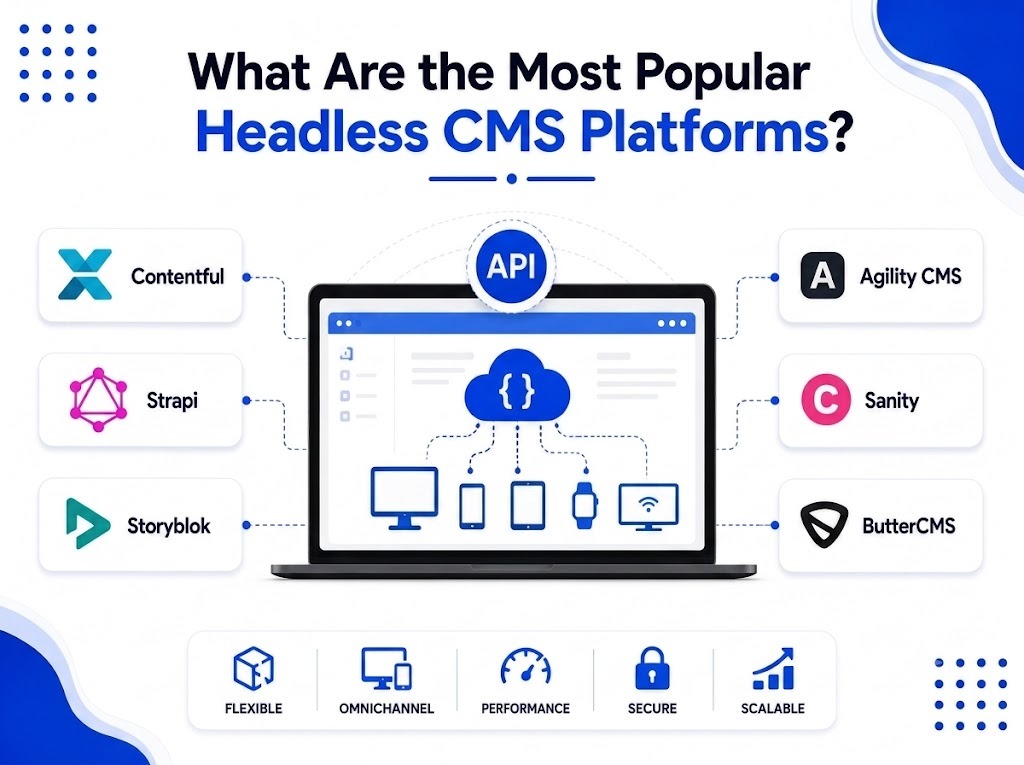
Several headless CMS platforms have become widely adopted, each with different strengths depending on business needs.

Contentful

Enterprise-ready, strong API performance

Sanity

Flexible, real-time collaboration

Strapi

Open-source, self-hostable, Node.js based

Storyblok

Visual, component-based with live preview

Popular Headless CMS
Headless CMS Use Cases

What Are Common Use Cases for Headless CMS Development?

Headless CMS architecture suits businesses managing content across multiple digital touchpoints or requiring high frontend performance.

Multi-Channel Publishing

Web, mobile apps, digital signage

High-Performance Marketing Sites

Static generation & SSR

Ecommerce Platforms

Unified product & editorial content

Multi-Region Websites

Localized content at scale

Our Process

How Does Web Brain InfoTech Build Headless CMS Solutions?

Our headless CMS development process is structured to balance content flexibility, frontend performance, and editorial usability.

01
Requirement Analysis

Channels & content needs

02
Content Modeling

Structured types & relationships

03
CMS Platform Selection

Contentful, Strapi, Sanity etc.

04
Frontend Architecture

React, Next.js, Vue.js

05
API Integration

REST or GraphQL

06
Editorial Workflow

Preview & publishing setup

07
Performance Optimization

Static generation & CDN

08
Testing & Deployment

Cross-channel validation

What Technology Stack Is Used for Headless CMS Development?

Headless CMS development combines a content platform with a separately built frontend application.

Headless CMS

Contentful, Strapi, Sanity, Storyblok

CORE

Frontend

React, Next.js, Vue.js, Gatsby

APIs

REST, GraphQL

Hosting

Vercel, Netlify, Cloudflare

Backend (Self-hosted)

Node.js, PostgreSQL, MongoDB

Security

API security & reduced attack surface

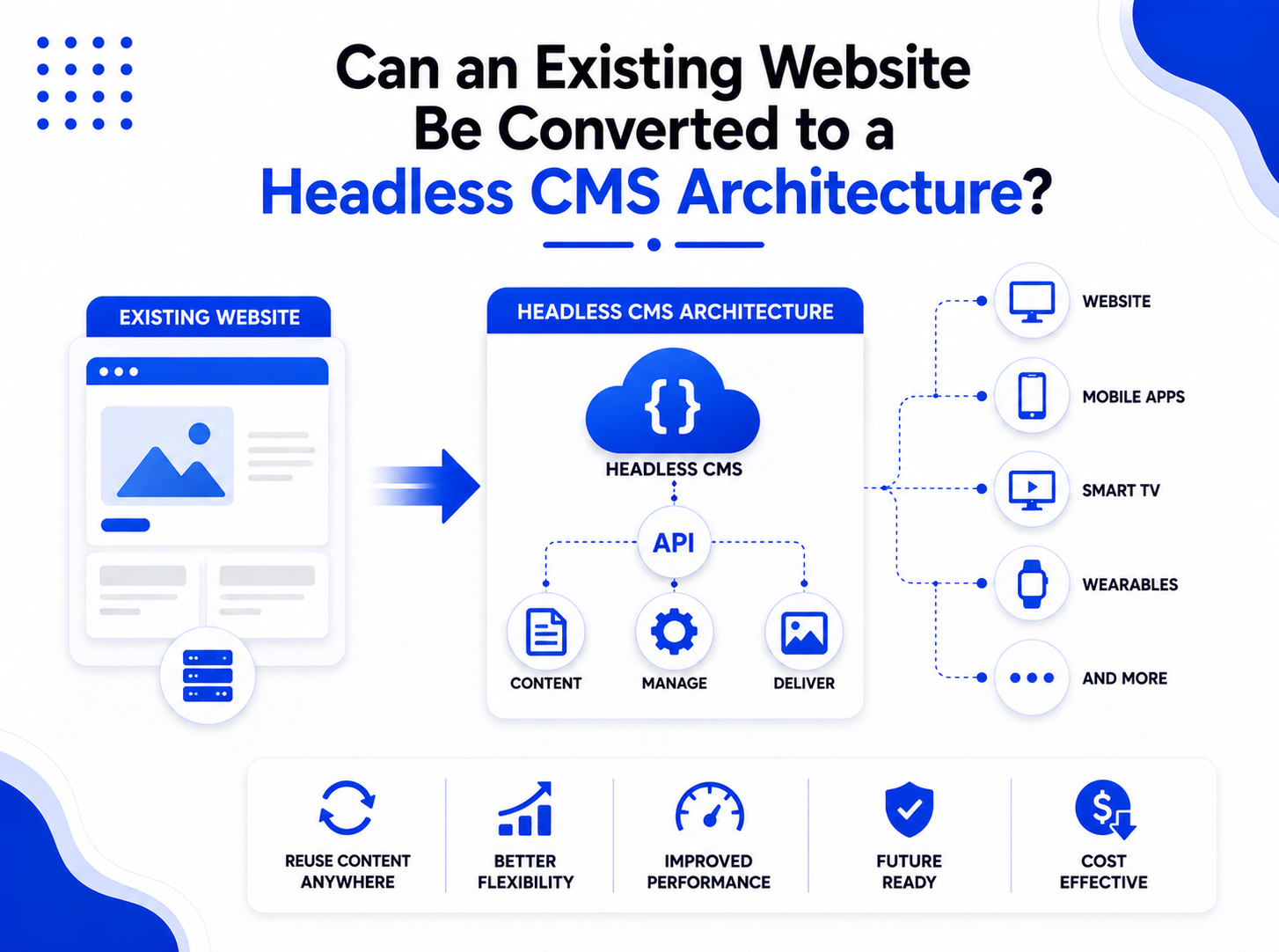
Can an Existing Website Be Converted to a Headless CMS Architecture?

Yes. Existing websites, particularly those built on traditional CMS platforms like WordPress, can be transitioned to a headless or hybrid architecture without discarding existing content.

Content Audit & Modeling

Restructuring into headless model

New Frontend Development

Modern presentation layer

Gradual Migration

Hybrid or full headless options

Headless Conversion
Client Love

Trusted by Real Clients

★★★★★ 4.9/5 average rating from 19,000+ verified reviews

❞
★★★★★

"Web Brain delivered a high-performance headless CMS solution that powers our website and mobile app seamlessly. Excellent work!"

PB

Patrick Brangan

Owner, Thread Salon

❞
★★★★★

"Professional headless CMS implementation with great content modeling. Our content team loves the workflow."

EM

Ersha MA

Founder, Sima Equipments

❞
★★★★★

"Smooth conversion from traditional CMS to headless architecture. Significant performance improvement."

MB

Maureen Brown

Director, Brown Law

Web Brain Team

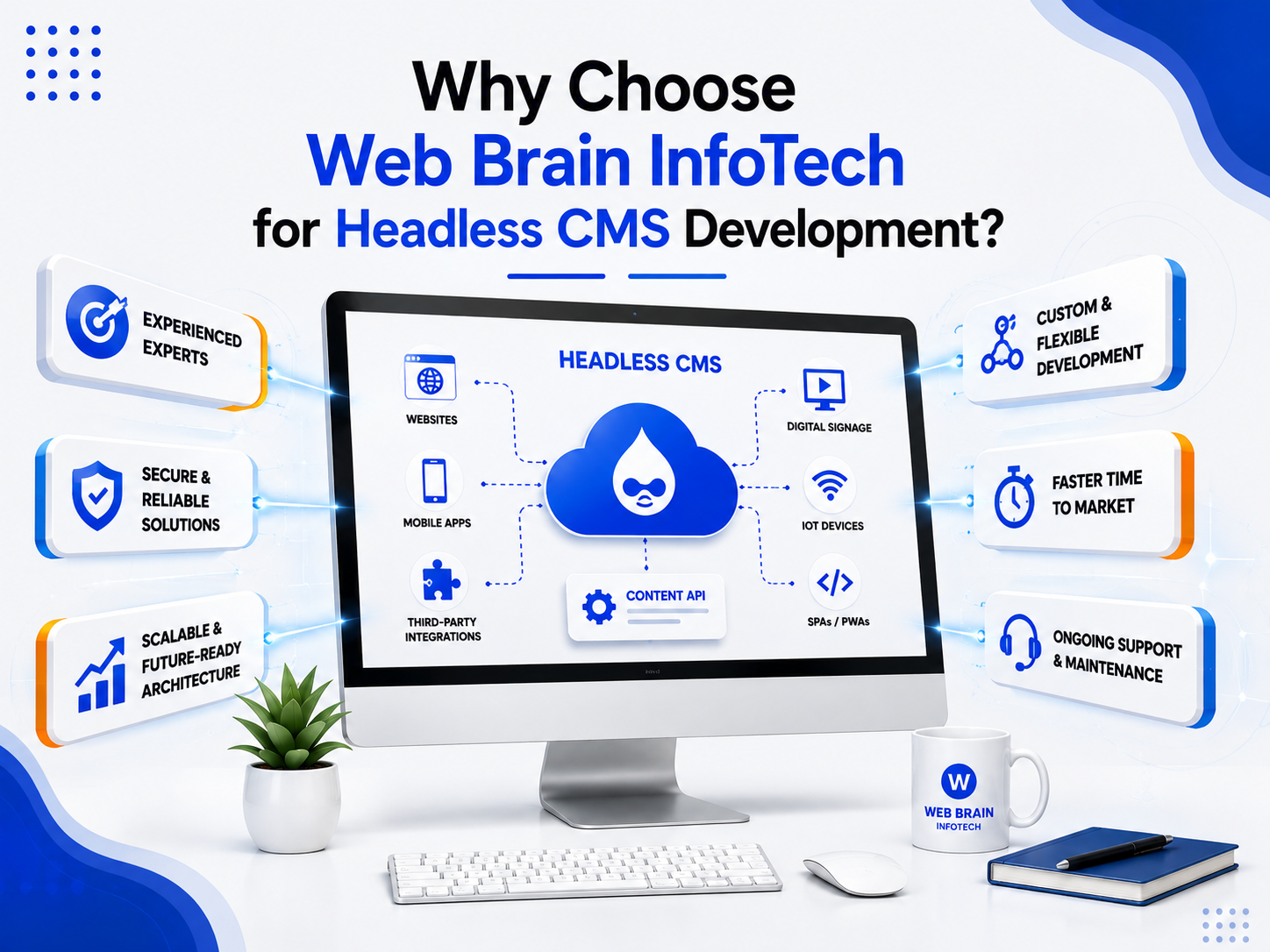
Why Choose Web Brain InfoTech for Headless CMS Development?

Web Brain InfoTech, headquartered in Delhi, India, brings practical experience across major headless CMS platforms and modern frontend frameworks.

Multi-Platform Experience

Contentful, Strapi, Sanity, headless WordPress

Frontend Expertise

React, Next.js, Vue.js

Content Model Design

Scalable across channels

Ongoing Support

Performance & architecture refinement

Got Questions?

Frequently Asked Questions

Straight answers about Headless CMS Development.

The main advantage is flexibility: content can be delivered to multiple channels (web, mobile, IoT) through APIs, and developers can use any frontend framework rather than being constrained by the CMS's built-in templating system.

Initial development costs can be higher since a separate frontend must be built, but headless architecture often reduces long-term costs through improved performance, easier scaling, and flexibility to reuse content across multiple platforms.

Yes. WordPress can function as a headless CMS using its REST API or WPGraphQL, allowing content to be managed in WordPress while a separate frontend, often built with React or Next.js, handles presentation.

Yes, when implemented correctly. Headless architecture, particularly when combined with frameworks supporting server-side rendering or static site generation like Next.js, can achieve strong SEO performance and fast page loads.

Yes. We provide ongoing monitoring, performance optimization, and content architecture support to ensure the system continues to perform well as content and channel requirements evolve.

Ready to build or migrate your Magento store?

Book a free strategy call and discover how Web Brain can scale your business digitally.

Chat with Us
Call Us +91-782 774 2414 Chat on WhatsApp
We're Hiring