Trusted by 5,000+ Businesses Worldwide

AI-Powered Web Development

Web Brain InfoTech, based in Delhi, India, builds AI-powered web applications for businesses across India and worldwide. AI-powered web development integrates machine learning models, natural language processing, and automation directly into websites and web applications, enabling smarter, more personalized user experiences.

★★★★★ 4.9/5 rating from 19,000+ verified reviews

Get a Free Project Quote

WebBrain development team collaborating on a client project in office
Why WebBrain

AI-Powered Web Development Company India

Web Brain InfoTech delivers AI-powered web solutions to clients in Delhi NCR, across India, and internationally, including the United States, United Kingdom, UAE, Canada, and Australia.

What Is AI-Powered Web Development?

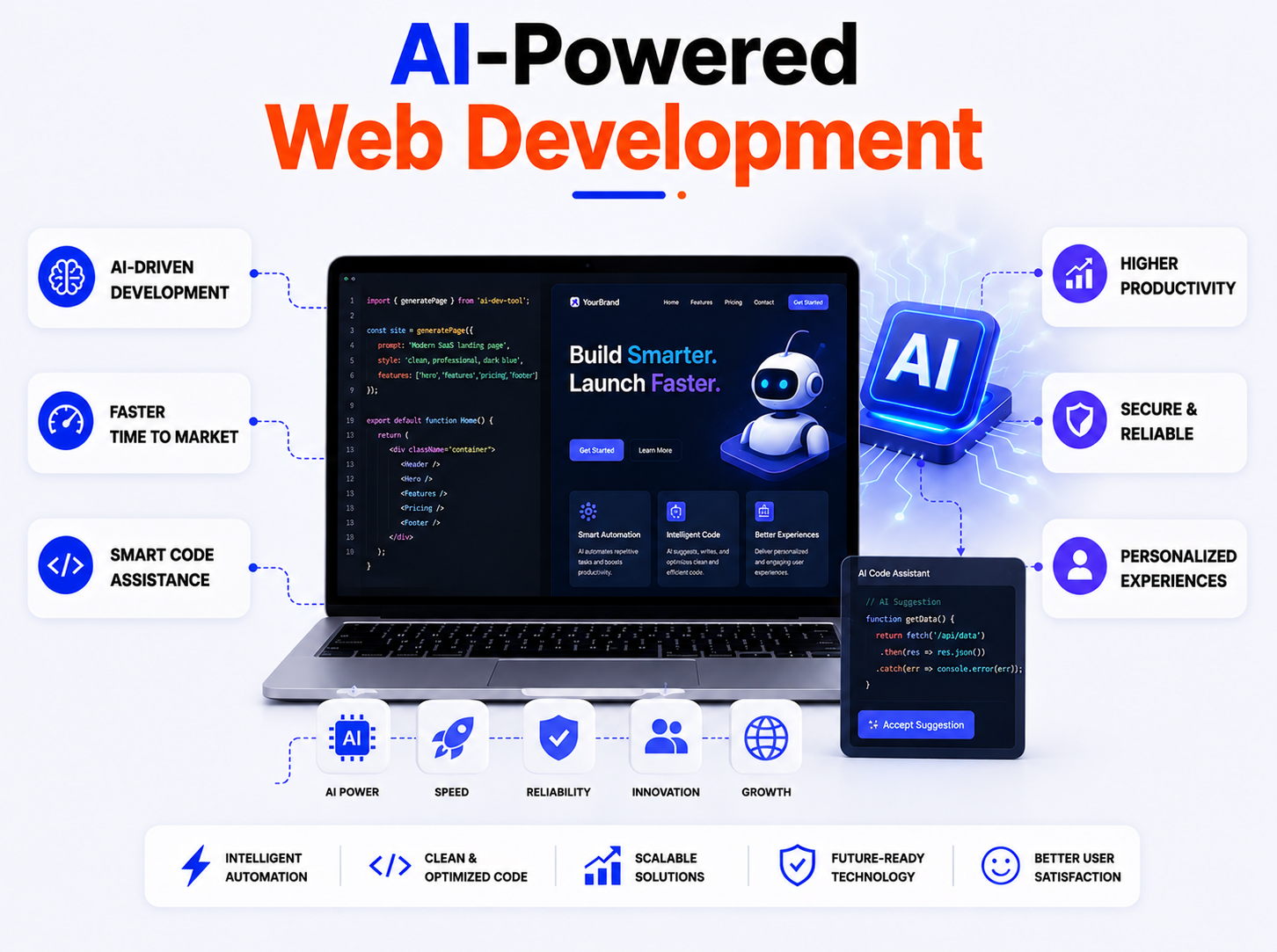
AI-powered web development is the practice of embedding artificial intelligence capabilities, such as machine learning, natural language processing (NLP), computer vision, and predictive analytics, into web applications.

AI chatbots and virtual assistants

for customer support and engagement

CORE

Recommendation engines

for personalized product or content suggestions

Natural language processing (NLP)

for search, sentiment analysis, and text understanding

Predictive analytics

for forecasting user behavior or business trends

Computer vision integration

for image recognition and visual search

Generative AI features

automated content creation and AI-assisted design

These capabilities are typically powered by large language models (LLMs), pre-trained AI APIs, or custom-trained machine learning models, integrated through APIs into the web application layer.

WebBrain development team collaborating on a client project in office

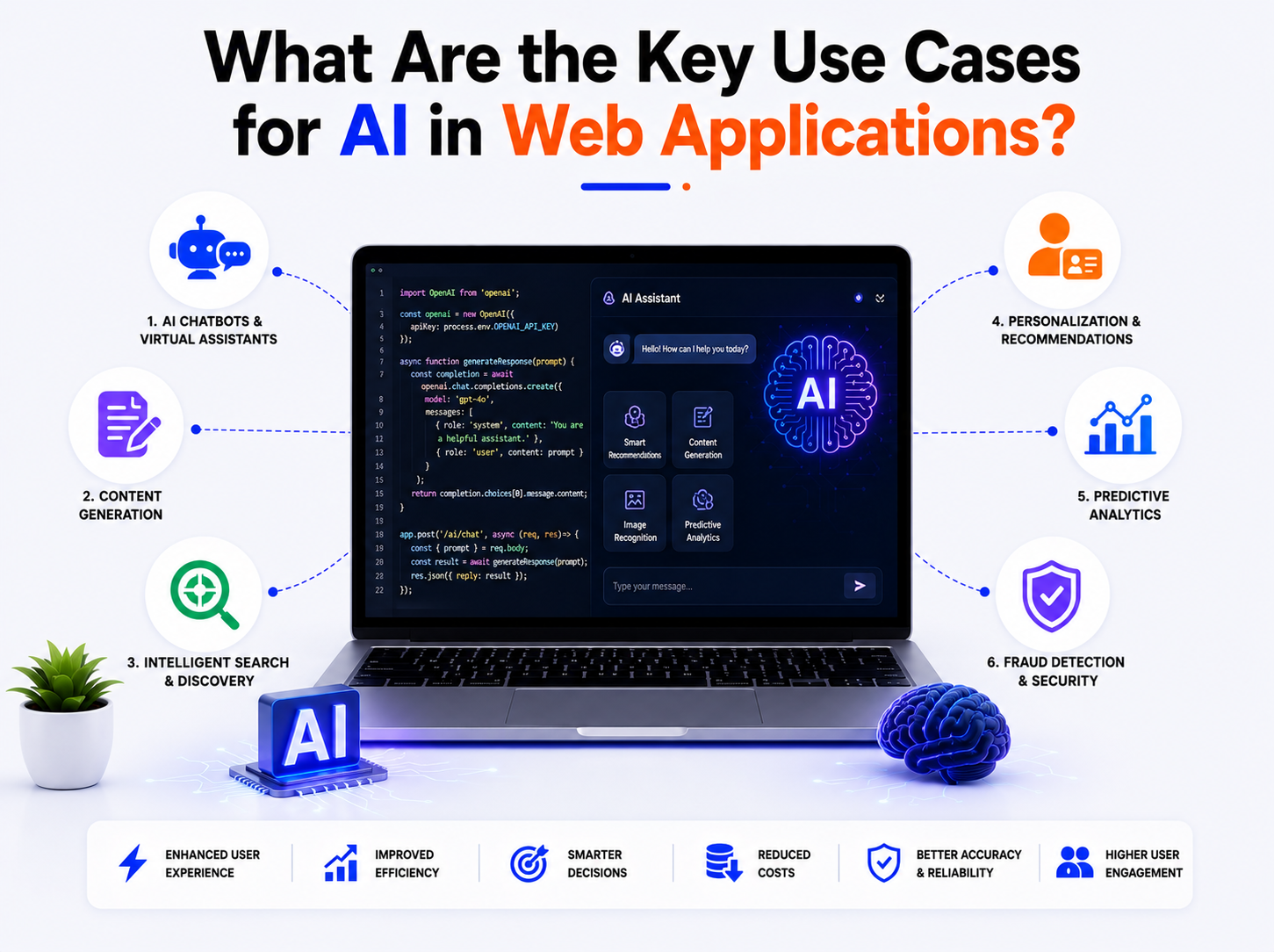
What Are the Key Use Cases for AI in Web Applications?

Businesses across industries use AI-powered features to improve engagement, efficiency, and decision-making.

AI chatbots for instant customer support and lead qualification
Personalized product recommendations on ecommerce platforms
AI-driven search that understands natural language queries
Sentiment analysis for monitoring customer feedback
Fraud detection systems for financial and ecommerce platforms
Automated content generation for blogs, product descriptions, and marketing copy
Image and visual search for retail and real estate platforms
Predictive analytics dashboards for sales forecasting and inventory planning
AI-powered resume or candidate screening for recruitment platforms
Voice search and voice assistants integrated into web interfaces

Each use case requires a different combination of AI models, APIs, and integration architecture.

How Is AI Integrated Into a Web Application?

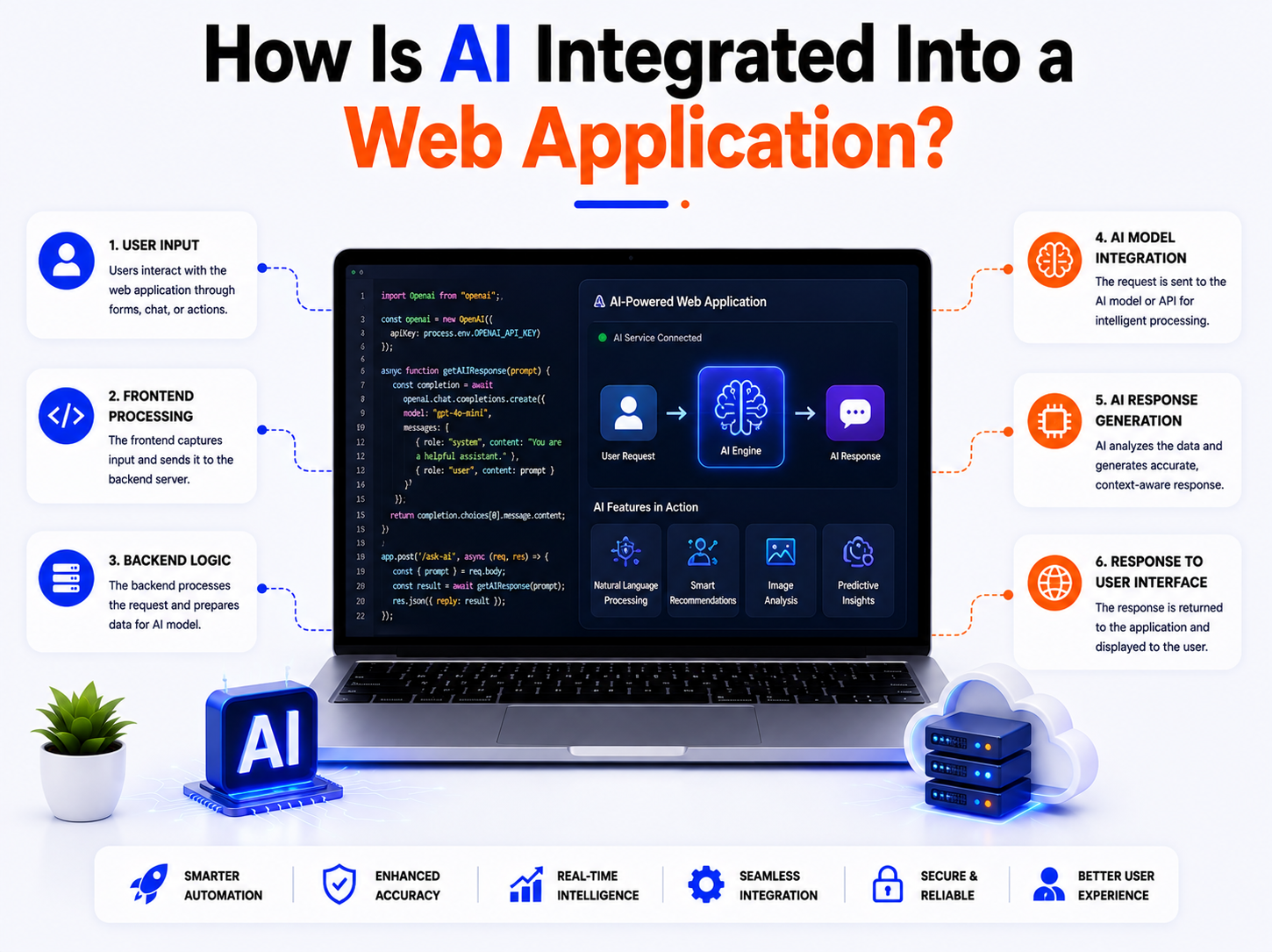
AI integration into web applications typically follows a structured technical approach, combining frontend interfaces with backend AI processing.

Third-party AI API integration

connecting to providers like OpenAI, Anthropic Claude, Google Gemini, or AWS AI services

Custom machine learning models

trained on business-specific data using frameworks like TensorFlow or PyTorch

Pre-trained model fine-tuning

adapting existing models to specific business use cases

Vector databases

storing embeddings for semantic search and AI-driven recommendations (Pinecone, Weaviate, Chroma)

AI orchestration layers

managing multiple AI calls, prompts, and workflows within the application

Edge AI processing

running lightweight AI models directly in the browser for faster response times

The architecture depends on whether the application needs real-time responses, batch processing, or a hybrid approach.

WebBrain development team collaborating on a client project in office

What Technology Stack Powers AI-Powered Web Applications?

Building AI-powered web platforms requires a combination of traditional web technologies and AI-specific tools.

Frontend

React, Next.js, Vue.js

CORE

Backend

Node.js, Python (FastAPI, Django), Java (Spring Boot)

AI/ML frameworks

TensorFlow, PyTorch, Scikit-learn

AI APIs and models

OpenAI API, Anthropic Claude API, Google Gemini, Hugging Face models

Vector databases

Pinecone, Weaviate, Chroma, FAISS

Cloud infrastructure

AWS (SageMaker, Bedrock), Google Cloud (Vertex AI), Microsoft Azure AI

Technology selection depends on the specific AI capability required, whether it's conversational AI, recommendation systems, or predictive analytics.

How We Work

How Does Web Brain InfoTech Build AI-Powered Web Applications?

Our development process combines standard web engineering practices with AI-specific planning and testing.

01
Use case identification

determining which AI features add genuine business value

02
Data assessment and preparation

evaluating available data for training or fine-tuning models

03
AI model selection

choosing between third-party APIs, pre-trained models, or custom-built solutions

04
Architecture design

planning how AI components integrate with the existing or new web application

05
Development and integration

building frontend interfaces and backend AI processing pipelines

06
Testing and validation

evaluating AI accuracy, response quality, and edge-case handling

07
Deployment and scaling

setting up cloud infrastructure to handle AI processing loads

08
Monitoring and continuous improvement

tracking AI performance and retraining models as needed

This process applies whether the client needs a simple AI chatbot or a fully custom recommendation engine.

What Are the Benefits of AI-Powered Web Development?

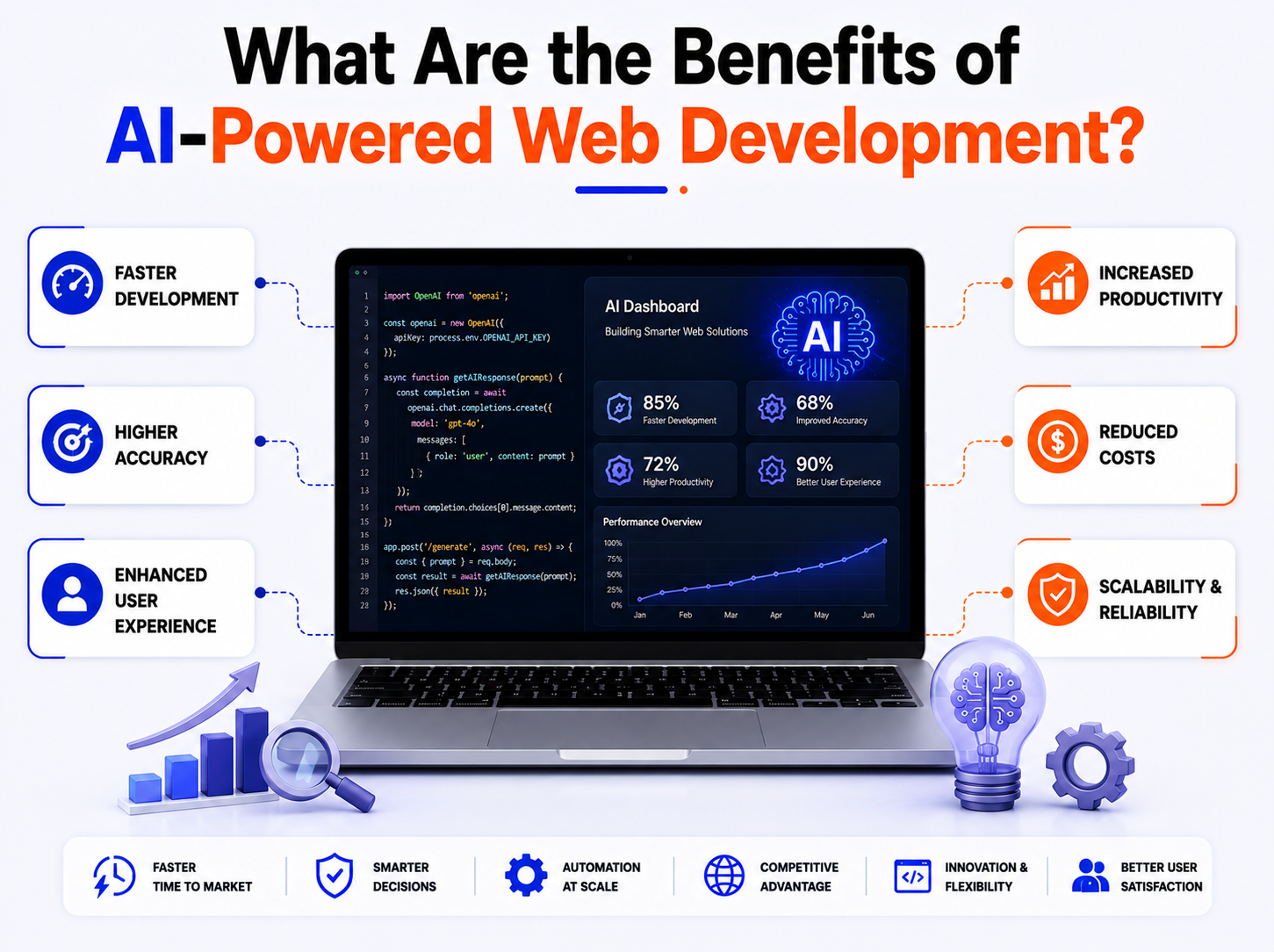
Integrating AI into web applications delivers measurable business advantages.

Improved customer engagement through personalized experiences and instant support
Increased conversion rates via smarter product recommendations
Reduced operational costs through automation of repetitive tasks
Faster decision-making with predictive analytics and real-time insights
Better customer understanding through sentiment and behavior analysis
Competitive differentiation by offering intelligent features
Scalable support operations through AI chatbots

These benefits compound over time as AI systems learn from more user interactions and data.

WebBrain development team collaborating on a client project in office

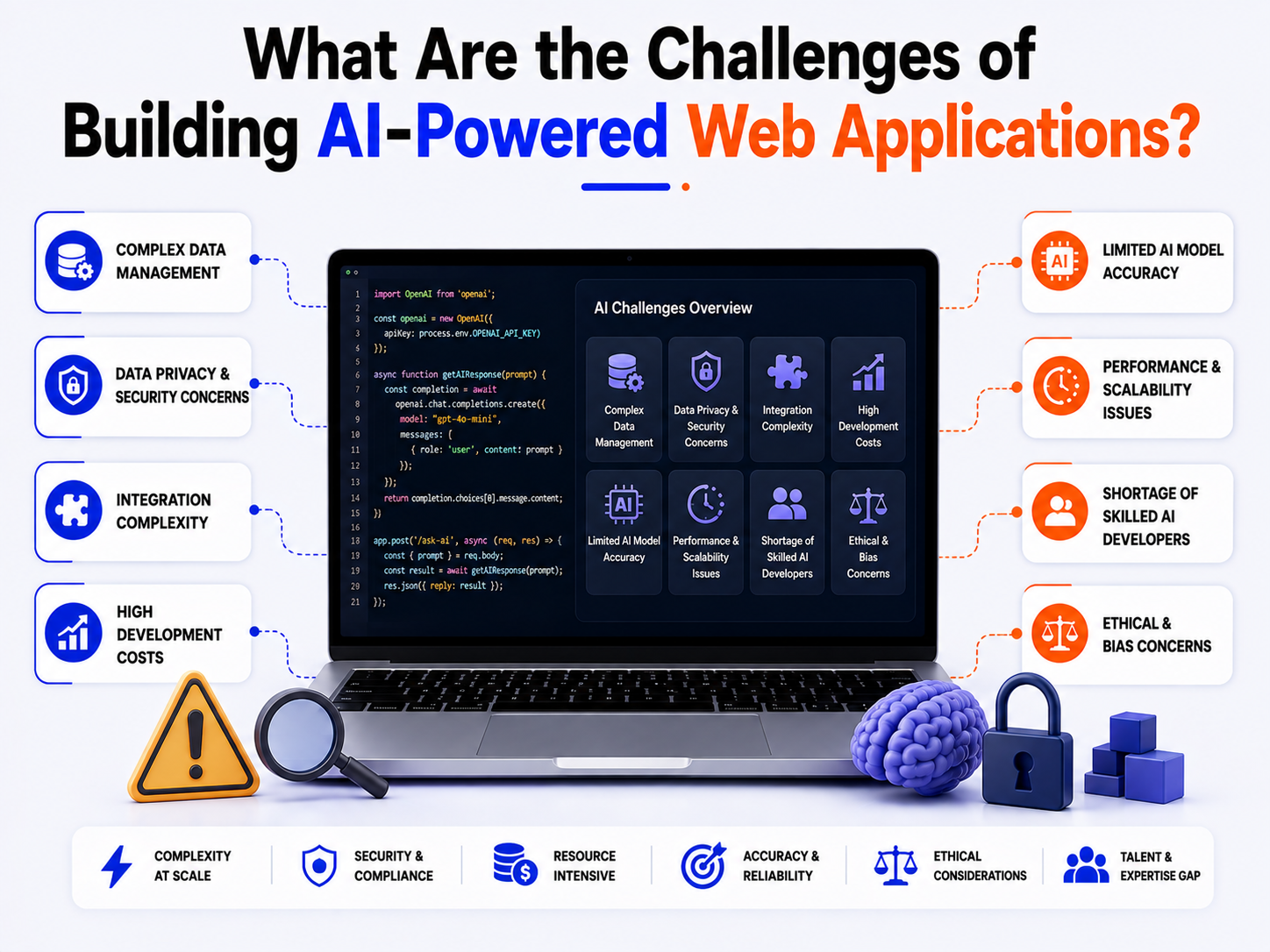
What Are the Challenges of Building AI-Powered Web Applications?

AI integration introduces complexity beyond traditional web development.

Data quality and availability

AI models require sufficient, clean data

Model accuracy and bias

ensuring AI outputs are reliable and fair

Latency management

keeping AI response times fast

Cost management

controlling API usage costs at scale

Data privacy and compliance

GDPR and other regulations

Explainability

making AI decisions understandable

Web Brain InfoTech addresses these challenges through careful architecture planning, data governance practices, and continuous performance monitoring.

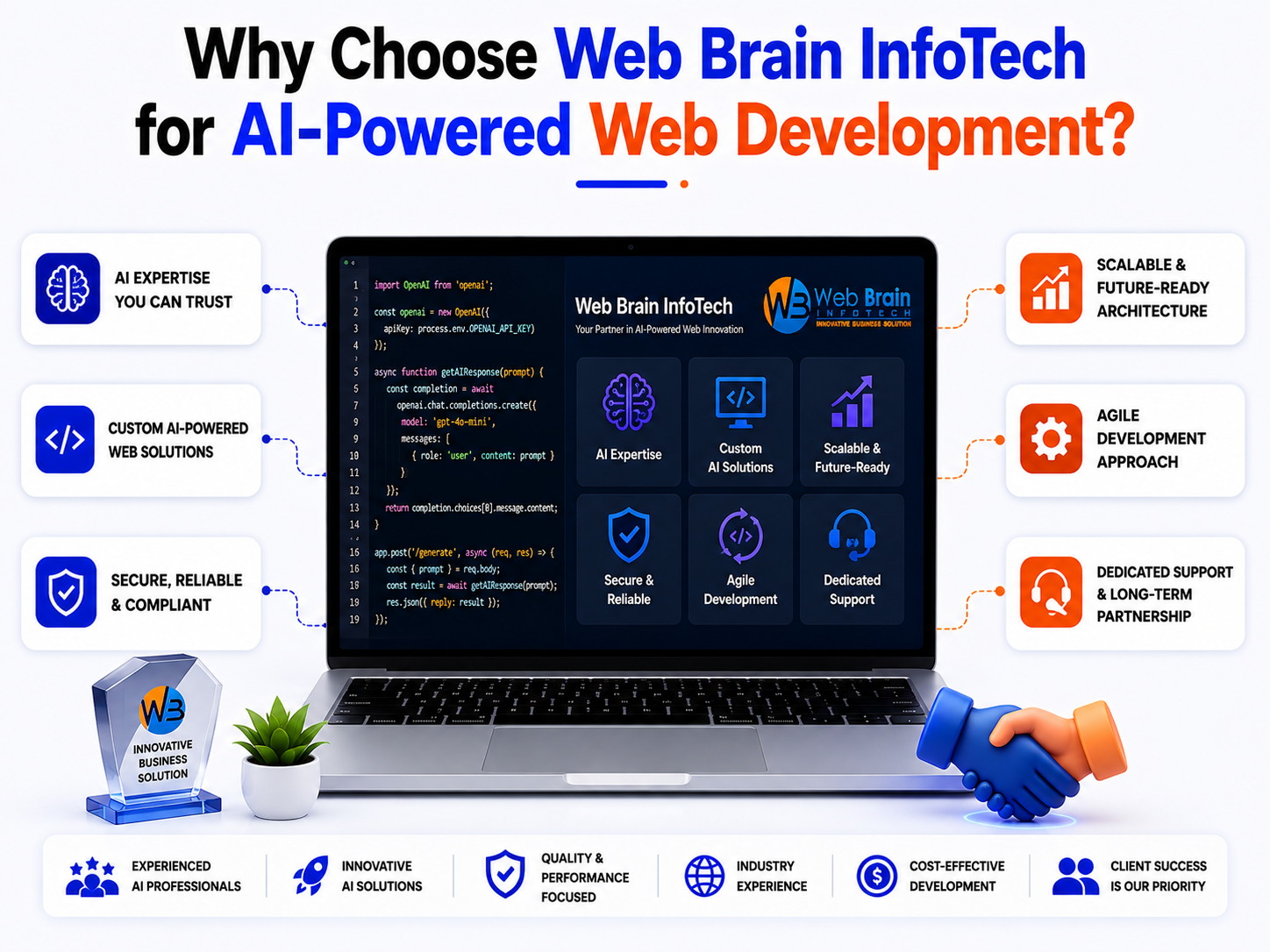
Why Choose Web Brain InfoTech for AI-Powered Web Development?

Web Brain InfoTech, headquartered in Delhi, India, combines web development expertise with practical AI integration experience.

Experience integrating leading AI APIs including OpenAI, Anthropic Claude, and Google Gemini
Capability to build custom machine learning models for business-specific use cases
Strong understanding of AI infrastructure, including vector databases and orchestration frameworks
Cost-conscious development that balances AI capability with operational budgets
Transparent project management using Slack, Jira, and Asana
Post-launch support including AI performance monitoring and model improvements

We work with startups, SaaS companies, ecommerce platforms, and enterprises looking to embed intelligent features into their web applications.

WebBrain development team collaborating on a client project in office
Got Questions?

Frequently Asked Questions

Straight, clear answers to your most common questions.

A regular web application follows pre-defined logic and rules. An AI-powered web application uses machine learning or AI models to adapt, predict, or generate responses based on data patterns, enabling more personalized and intelligent functionality.

Yes. AI features such as chatbots, recommendation engines, or smart search can typically be integrated into existing websites through APIs without requiring a complete rebuild.

Common AI models include large language models like OpenAI's GPT, Anthropic's Claude, and Google's Gemini, along with specialized models for image recognition, recommendation systems, and predictive analytics.

Costs vary based on the complexity of the AI feature, whether using third-party APIs (lower upfront cost) or custom-trained models (higher development cost but more tailored results).

Data privacy is addressed through secure data handling practices, encryption, access controls, and compliance with relevant regulations such as GDPR, depending on user location and industry requirements.

Yes. Features like personalized recommendations, AI-driven search, and chatbot-assisted shopping have been shown to improve user engagement and conversion rates on ecommerce platforms.

Yes. We offer ongoing monitoring, performance tuning, and model updates to ensure AI features continue performing accurately as user behavior and data evolve.

Web Brain InfoTech — AI-Powered Web Development Company, Delhi, India. Serving clients locally and internationally.

Ready to Build Something Extraordinary?

Book a free strategy call and discover how WebBrain can scale your business digitally.

Chat with Us
Call Us +91-782 774 2414 Chat on WhatsApp
We're Hiring